The New HR Stack: Why One System of Record Is No Longer Enough
For many years, the core of HR technology was built on one concept: build an effective system of record.
Maintain employee data. Manage payroll. Manage attendance and leaves. Run reporting.
This concept is still relevant in many Indian companies. But modern companies expect more from HR technology.
There are specific solutions meant purely for recruitment. Payroll can be run independently by a system. There are other solutions for performance management. Companies may have a communication and collaboration app for employees. Even AI-based assistants appear in everyday processes. Analytics software then collects data from different systems.
So what we have now is a new reality: HR technology is becoming a stack rather than a single solution.
The question is not anymore about the availability of the correct tools but about integration into one workforce operation.
HR Technology Has Become a Stack, Not a Single Tool
Technology needs differ among various HR processes.
Recruitment process involves a pipeline of candidates and an interview system. Payroll involves accurate calculation. Attendance relies on real-time activities of employees. Performance Management relies on target, objectives and feedback.
While it makes sense to add an extra tool for each need, the relationships between the tools become as important as the tools themselves and this can become a challenge once the number of tools increases.
The Hidden Cost of a Fragmented HR Stack
Disconnected systems generate additional tasks.
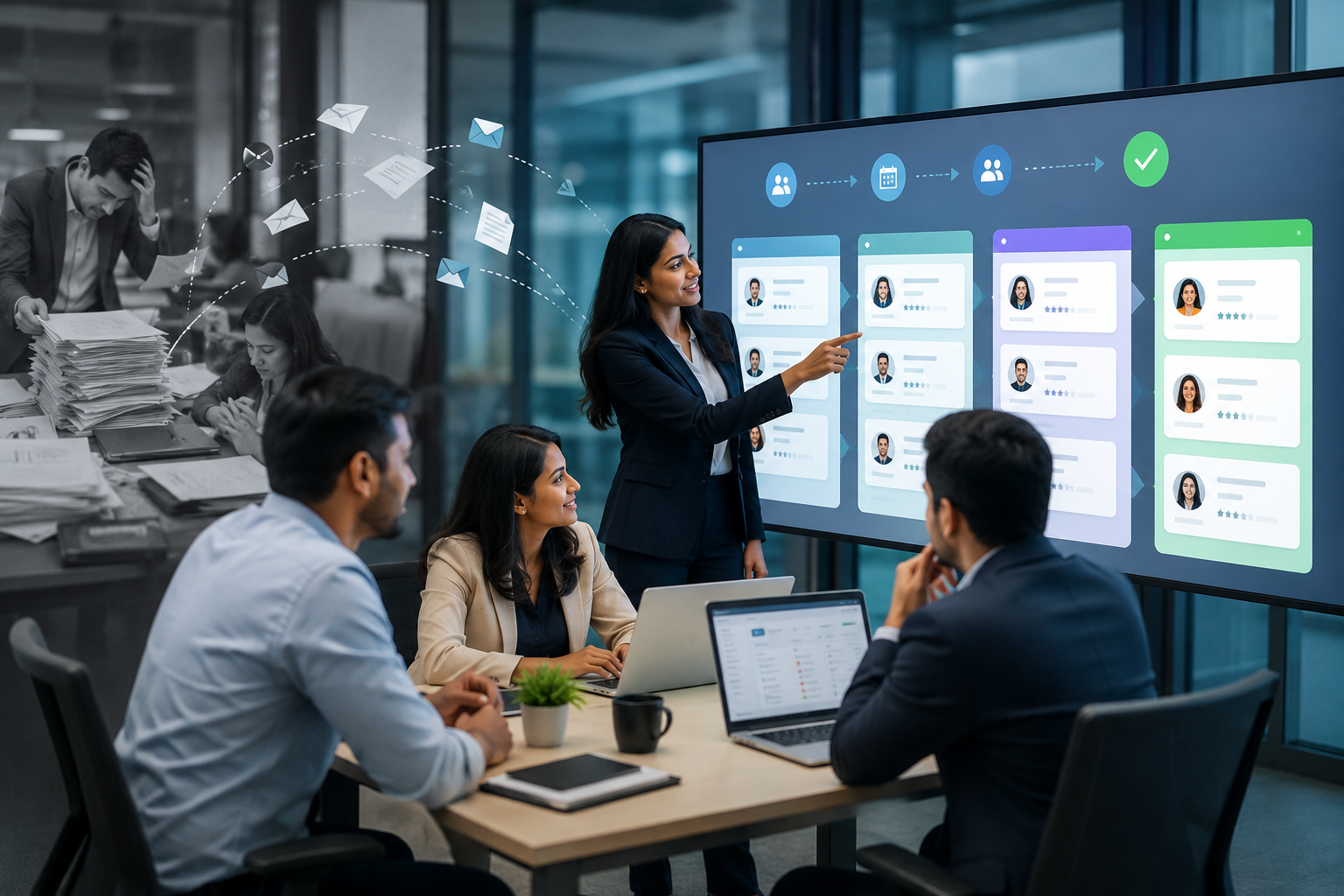
HR departments might have to transfer data from one platform to another. The finance department might have to make sense of different numbers. Managers might be making decisions on a different data set as that of HR. Employees might have to give the same data twice to different stake holders.
Over time, these little disconnects create organizational friction.
There may be enough technologies in the organization, but there may be no overview of what is going on wrong.
This is the paradox of a fragmented HR stack. More applications do not necessarily mean better HR operations.
Integration Is Not the Same as Connection
Connecting systems via integrations may be valuable, but this does not mean that integration is the solution to achieving a connected experience.
A true connection should involve the transfer of data and processes in a significant way.
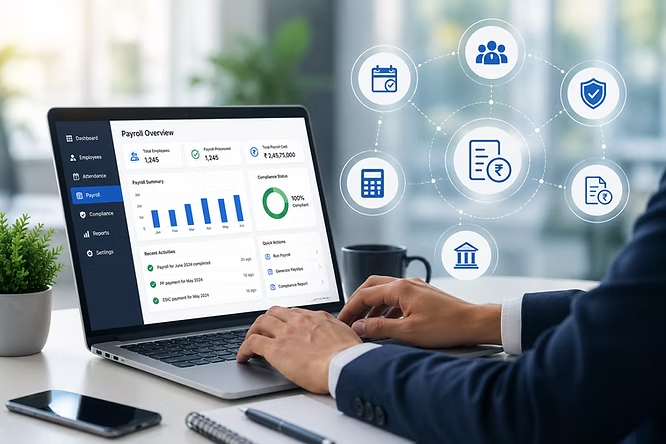
Attendance may impact the payroll process. Changes to employees may be routed to related HR processes. Recruitment may lead to onboarding. Requests from employees may be passed through the correct workflow process.
It’s not about connecting applications; it’s about connecting work.
The Data Backbone Behind Modern HR
For a connected environment of the workforce, a consistent backbone is required.
The data about employees should not be available in different versions. Any HR information updates should be updated throughout all processes. There should be proper visibility for managers. And HR should not keep reconciling data before doing something.
And this is where the concept of single source of truth comes into play.
TheCloudTree®.ai’s approach to unified HR operations is focused on the unified workforce data, unified HR, employee self-service, analytics, and connected processes rather than isolated HR processes.
Not just cleaner data is the goal.
It is about a consistent backbone of operations.
Where AI Fits Into the HR Stack
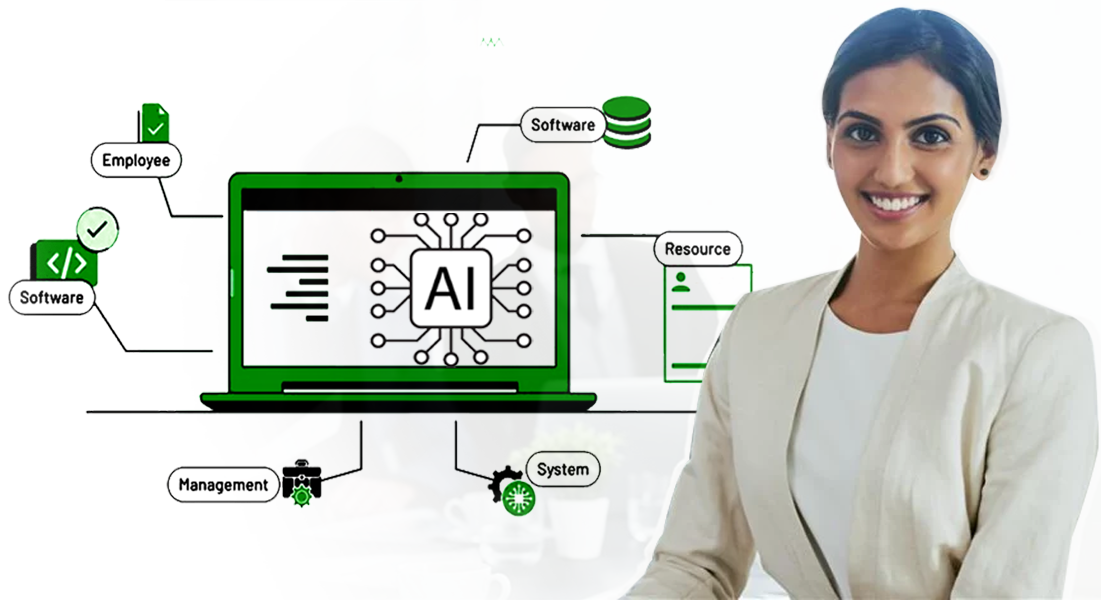
AI brings an extra layer to this technology stack.
An AI assistant could respond to queries, but the ability to do so depends greatly on the knowledge base available to it.
If an employee seeks information on his/her leave balance, then the typical chatbot cannot contribute much without having access to the actual HR data of the organization.
If a manager requires information related to his/her team, then the relevant workforce context is needed by the system.
If HR seeks help with a workflow, then AI would need to have knowledge about that workflow.
Thus, the future of AI for HR is not about building yet another chatbot.
It is about embedding intelligence in the workforce context.
Why Context Matters More Than Another AI Assistant
Imagine the difference between posing an HR question to an AI system versus a question pertaining to your organization.
The former can be answered using general knowledge.
The latter needs the context of your organization.
Policies, employee data, workflow, approval process, roles, permissions, and business rules all contribute towards providing the answer.
That is the reason why the architecture that powers the AI is important.
The better the integration between the HR technology and relevant processes, the more helpful the intelligent assistance becomes.
From Applications to an Intelligent Workforce Platform
This represents a broader evolution.
Separate applications solve individual HR problems.
Integrated systems allow those applications to exchange information.
Connected HCM platforms bring processes together.
The next step is an intelligent workforce platform where connected information, workflows, automation, analytics, and AI can work together.
The distinction is important.
The platform is no longer simply where HR goes to complete tasks. It becomes part of how the organization operates.
What This Means for HR, Finance and Business Leaders
For HR, a connected tech world helps eliminate unnecessary administrative burdens and provides visibility over workforce-related processes.
For finance, a connected world offers opportunities for reducing reconciliation and better visibility of costs.
For management, it delivers faster access to information about employees and processes.
For employees, it means fewer disconnected tools and greater opportunities for self-service.
The key value is delivered by the cumulative impact of these capabilities rather than an individual one.
How TheCloudTree®.ai Approaches Unified HR Operations
TheCloudTree®.ai Human Capital Management (HCM) solution is built on the principle of unified HR processes, in which all components such as HR, payroll, attendance, employee self-service, analytics, automation, integrations, APIs, security, and scalability are integrated into one common system.
Furthermore, its flexible and scalable architecture allows handling various organizational designs as well as scaling up to numerous branches, departments, categories of employees, and locations. Enterprise features include multi-organization and multi-vertical designs, AI-enabled functionality, integrations, and customization capabilities.
This approach provides the basis for organizations aiming at building a cohesive ecosystem of HR technologies.
Conclusion: The New HR Stack Needs to Work as One
The future of HR technology will not automatically be determined by how many apps one owns.
It will be determined by how well they function together.
An effective workforce management system requires the availability of information, process connectivity, context, intelligence, and the ability to adapt to change.
The system of record was a great place to start.
The next stage must involve developing a system that allows the organization to operate, know, and react to the workforce.
Build a Workforce Technology Stack That Works as One
Are your HR systems genuinely connected, or are your teams still working across disconnected tools? Explore TheCloudTree®.ai HCM and see how a unified, intelligent workforce platform can bring your HR operations together.