How Next-Gen HRMS Software Helps Companies Manage Labour Compliance across India
HR and payroll management in India is a complex process that involves dealing with various central and state regulations. A company may be in full compliance in its HQ state, but unknowingly be out of compliance in other states it has expanded due to the application of the wrong tax slab or similar errors. As companies grow bigger and bigger outside their head quarter boundaries or have remote employees, these rules can be a costly legal liability if manually tracked.
Let’s look at how modern HRMS platforms address the multi-state labour compliance challenges.
Why State-Wise Compliance Is Difficult?
State borders change the regulatory ground truth immediately. A policy that is compliant with the labour laws in Karnataka may not be compliant under labour laws in Maharashtra and Telangana.
Under India’s Constitution, labour sits on the Concurrent List. It is subject to legislation on the part of both the central and state governments. This implies that each state has a distinct system of working conditions and payroll taxes.
Employers are required to follow varying regulations in different places:
- Leave Entitlements: Each State has its own Shops and Establishments Act that determines the statutory earned leave. Maharashtra needs 21 days in a year, Karnataka needs 18 days, and Delhi needs 15 days. One national leave policy will under-compensate workers in a number of states.
- Professional Tax (PT) Deductions: Deductions vary from state to state, with a minimum of ?0 and a maximum of ?2,500 per year. Karnataka has set the monthly charge at ?200 per month through the e-Prerana portal. In Maharashtra, the limit stands at ?2,500 per year with gender-based slabs through the Mahavat portal. At the same time, states such as Haryana and Delhi do not impose PT.
- Labour Welfare Fund (LWF): Contribution rates and cycles vary drastically. In Maharashtra, employees get a reduction of ?25 for half a year. Karnataka has a mechanism to collect annually and has recently revised its applicability criteria from 50 employees to 10. In most states, an across-the-board deduction of LWF per month is a direct violation of the law.
- Operating Hours: IT establishments get some specific exemptions, including 24×7 working hours and women working at night in Karnataka and Telangana. Other states are still very strict.
State-specific compliance still applies to those working remotely. Always remember that the applicable state is the one in which the employee works, and not the one in which the company is registered. If the remote worker is from West Bengal, the company needs to register and deduct PT in West Bengal.
Common Problems Companies Face Without an HRMS
The manual approach requires HR professionals to record contributions on spreadsheets, which may result in costly errors in the calculations. Scaling operations is pretty challenging manually because threshold obligations fall through the cracks.
Common problems include:
- Missing Critical Deadlines: PT is collected on a monthly basis in Karnataka by the 20th of every month, while in Tamil Nadu, it is collected half-yearly. Manual management of these calendars assures missed payments and penalties.
- Applying the Wrong Slabs: Applying home-state PT slabs or using the wrong tax brackets will result in under deductions resulting in employee complaints and impact productivity.
- Ignoring Relocation Risks: When a remote employee relocates from Pune to Gurugram, his or her PT obligation goes down to zero, and the statutory leave floor changes. Spreadsheets don’t keep track of this, which is why filings may get wrong in both states.
- Scattered Documentation: Documents are split into physical files, making it hard to find records during unexpected labour inspections. State inspectors have particular format requirements for wage and attendance registers. Postponing these requests will make suspicion grow and trigger more audits.
In the end, manual methods waste valuable HR time that could be spent on talent retention and employee engagement.
Example: A Company Operating in 4 States
Consider a SaaS company that grew from Bengaluru to Hyderabad, Pune, Chennai, and recruited engineers in Gurugram, who all work remotely.
Prior to the HRMS implementation, the company had the same offer letter, leave policy and payroll run for all. This generated a huge amount of publicity. The Gurugram hire did not owe any professional tax, whereas the Pune office needed Maharashtra’s specific PT guidelines and a 21-day leave policy. The annual LWF cycle was what the Bengaluru team needed in Karnataka.
Once the company implemented an HRMS, the system automatically identified the location of each employee. It immediately implemented Maharashtra PT Rules in the Pune office, LWF’s Karnataka cycles in the Bengaluru office and leave policies for Shops & Establishments in the Chennai office.
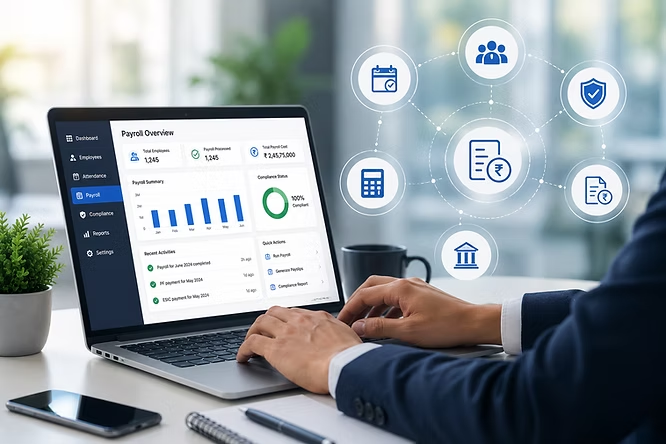
A centralised dashboard facilitated the executive team to see the labour compliance risks of the entire pan-India workforce from a single point without having to cross-verify manually.
How TheCloudTree®.ai can help?
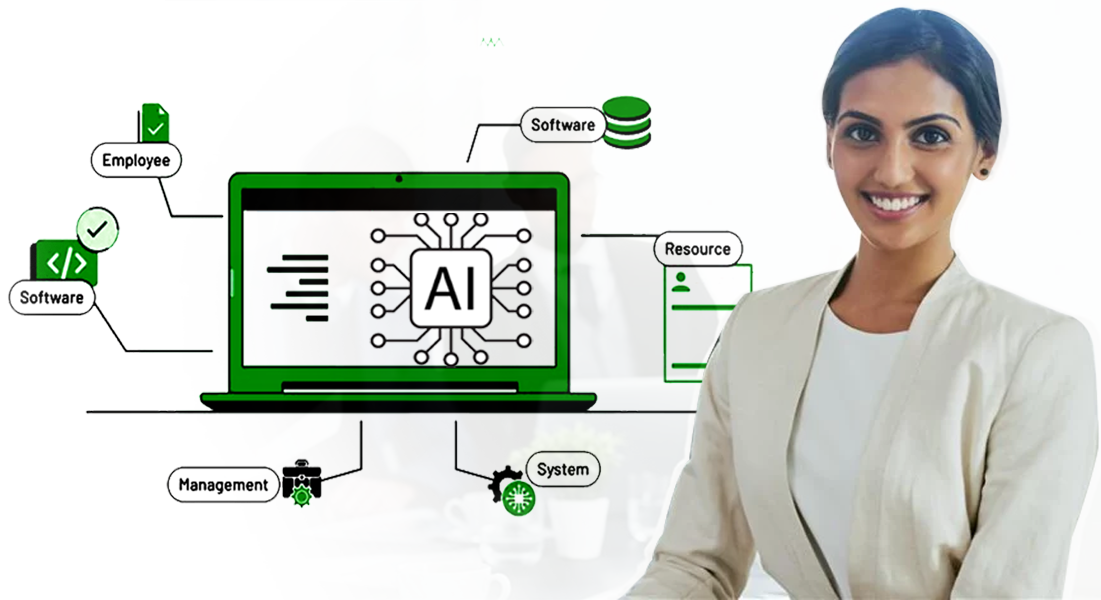
Compliance with Indian labour laws demands instant and correct coordination on a multi-state level. TheCloudTree®.ai is a human capital management (HCM) platform that uses artificial intelligence to manage scaling workforce operations without adding complexity. Core HR, Payroll, and Time tracking are all in one platform, and there are no more disconnected tools.
The software automates complicated processes to make your business audit-ready:
- State-Wise Payroll Configuration: Minimum wage, leave structure, tax rules can be setup as per the work state of the employee.
- Automated Calculations: The software performs the calculations of EPF, EPS, ESI and state-specific LWF contribution, while respecting statutory limits.
- Centralised Records: Appointment letters, statutory registers and PF nominations are all kept safely in a searchable central repository.
Conclusion
Secure cloud deployment provides role-based access control to ensure that your data is secure. With an intelligent platform like TheCloudTree®.ai, businesses streamline intricate payroll calculations, store compliance documents securely, and create a solid framework for national expansion. Review your current compliance processes and make the transition to an AI-powered solution to protect your business.