The Paradigm Shift in Human Capital Management
HR Has Moved Beyond Reactive Management
Traditionally, HR software was designed based on a simple goal, which was to gather data, process HR-related requests, and manage employee documents. Whenever an employee would submit a request, HR would handle it. Whenever a payroll calculation was required, the software would make the calculation. In case managers asked for a report, HR person would prepare it.
This approach proved effective when HR management was more administrative. However, modern workforces are more dynamic, diverse, and dispersed, which is why organizations now require HR to predict workforce needs and solve problems before they become organizational challenges.
This paradigm shift is changing the approach to Human Capital Management as a whole.
From Forms and Workflows to Connected HCM
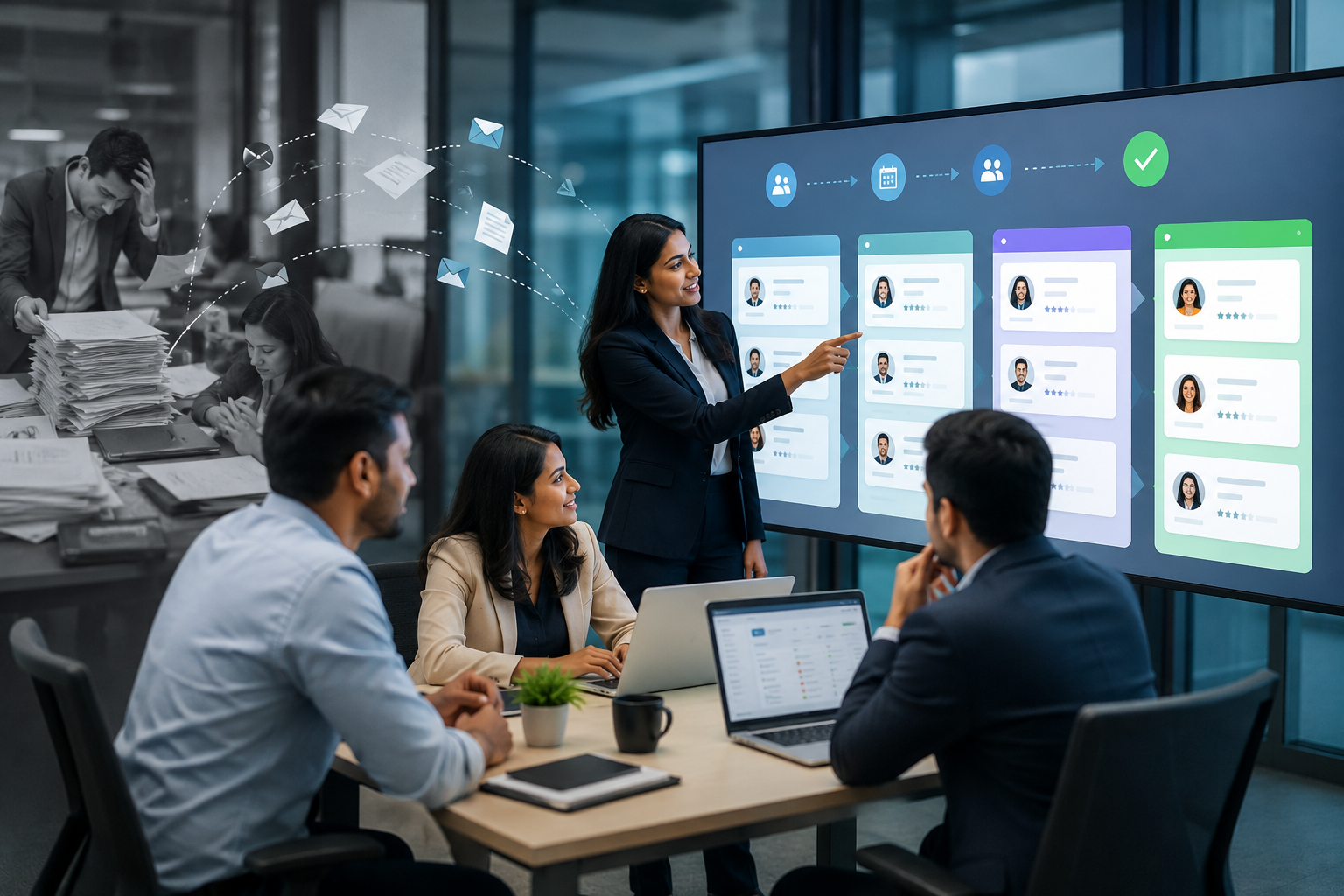
First of all, it was about leaving paper-based forms, spreadsheets, and fragmented processes.
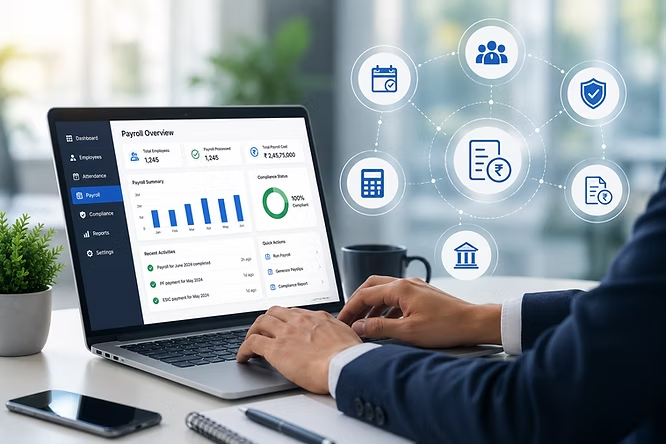
Digital HCM helped to integrate things like information on employees, attendance, payroll, recruitment, leaves, and other workforce processes. It saved time on routine work and offered HR teams a better way to organize their routine activities.
However, this is not the end point, a system can handle information effectively and yet not provide anything to help HR teams to see what’s coming up next.
This is how the next phase of HCM starts.
Automation Was the First Step, Not the Destination
The advent of automation altered the nature of work done by HR teams. Calculations, approvals, notifications, and employee requests were no longer necessary to be performed manually and reviewed multiple times making back and forth corrections.
Still, automation usually performs actions based on pre-defined rules. It just does what the workflow asks it to do.
The future HCM will be more intelligent, such technologies will be able to detect patterns, notice exceptions, offer appropriate data, and assist HR teams during the process.
The point is not so much in the speed of doing things but rather in the understanding of what is going on.
The Rise of Proactive HR Operations
A proactive Human Resources department is not going to react only when all issues turn into problems.
There are such situations as changes in attendance patterns, increase in the demand on the workforce, unusual requests from employees or increased pressure from the workloads of some , which require more attention from HR to plan for solutions. Once technology is able to link all those signs, then Human Resources will be able to look into the matter before it affects anything significant.
It means that the role of HCM transforms from being an input-driven tool into a proactive one for Human Resources operations.
From Proactive to Predictive Intelligence
Now comes predictive intelligence.
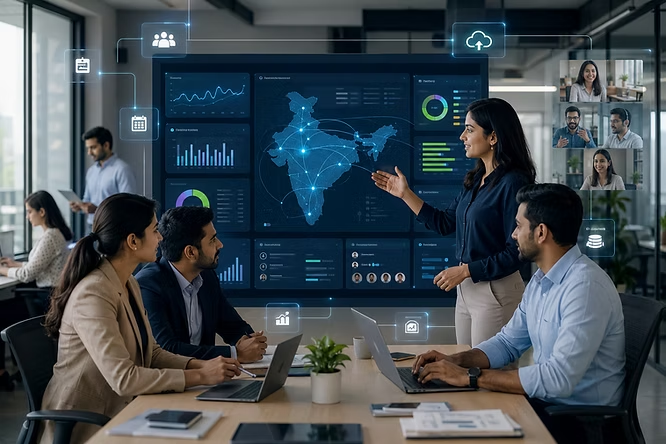
No longer limited to merely presenting what has transpired, an intelligent system uses historical and current data to determine future trends that may emerge. It has applications for workforce planning, resource management, staffing needs, cost control, and many other areas where looking into the future is useful.
Predictive intelligence is not a situation where the machine makes its own decisions. The power of this tool is in enabling HR executives to think ahead and assess their options.
The question moves on from “What happened?” to “What will happen next, and how do we get ready for it?”
Intelligence Inside Everyday HR Processes
In this way, the process proves most helpful where there is intelligence within daily HR processes instead of intelligence being an independent analytics exercise.
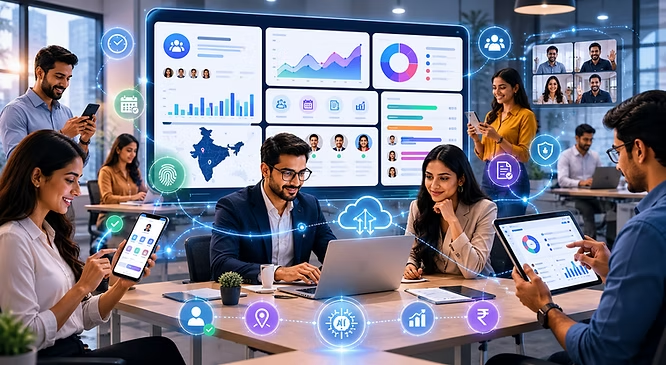
The intelligent HCM solution can help in answering employee questions, helping with workflow, facilitating processes, providing relevant information, and helping HR teams figure out areas that need their attention.
For the employees, this can provide faster access to information and less dependence on HR for common issues. For the HR team, this means less work and more time for workforce planning.
What Changes for HR Leaders?
With HCM becoming smarter, HR leaders no longer have to spend most of their time just observing what is happening in the operation but will be able to understand its significance.
Rather than waiting for the monthly reports to spot a problem in the workforce, leaders will have a clearer insight into the trends. Rather than having to track all routine requests themselves, HR departments will be able to leave that to technology and focus only on the exceptions.
It doesn’t make people irrelevant in HR. It makes human judgment more valuable.
The Human Role Becomes More Strategic
The aim of an intelligent HCM system is not the elimination of humans from the decision-making process in HR. Rather, it is about eliminating any friction that occurs in the process of making such decisions.
With administrative activities minimized and insightful information made easily accessible, the professionals in HR can devote their time to matters of strategic importance.
This includes workforce development, organizational planning, engaging with employees, among others.
How TheCloudTree®.ai Supports the Shift
TheCloudTree®.ai HCM integrates intelligent assistance, workflow automation, employee self-service, analytics, and predictive tools to assist with this transition.
The overall change will be moving from technology that manages HR transactions to one that actually participates in workforce operations. With the proper base set in place, the company can steadily progress from reacting to administering to managing, and eventually planning, their workforce.
Conclusion: The Next HCM Is Built to Anticipate
The evolution of HCM is no longer limited to forms, spreadsheets and technology which was designed only to keep information about employees.
The future belongs to the systems which will be responsive and intelligent, allowing HR professionals to see what is going on detect possible changes and prepare for the future.
The true revolution is not about integrating AI into HR technology. It is about the new expectations of businesses from HCM.
Move from Reactive HR to Intelligent Workforce Management
Ready to advance your HR processes beyond regular administrative activities? Learn more about TheCloudTree®.ai HCM and see how intelligent technology can prepare you for what’s next.