Typical HR Challenges and The Role of HR Management Systems (HRMS) India
Typical HR Challenges and The Role of HR Management Systems (HRMS) India
Updated: Nov 12, 2024
INTRODUCTION
HR Management Systems (HRMS) are transforming the way Indian businesses manage their human resources. Get ready to learn quickly about the main HR issues that might be holding your business back, how they affect your operations and how the right management system can help you tackle these problems effectively. Let’s embark on this journey together to improve your HR practices and help your business reach new heights in India! Read all about the role of HR management systems in India on our blog. Find out how these systems are revolutionizing HR processes and improving efficiency.

KEY HR CHALLENGES IN INDIA
High Employee Turnover
High employee turnover makes things really tough for HR professionals. This problem is especially common in industries like Manufacturing, IT, retail and BPO. Several reasons behind this issue include:
-
A focus on higher salaries leads to frequent job changes.
-
Many employees feel they aren’t engaged
-
Many employees can’t see how to advance in their careers within that one company.
-
Concerns about work-life balance also drive people to leave their jobs.
Skill Gaps and Talent Shortages
Even though India has a big population, many industries struggle with skill gaps and not having enough talented workers. This problem is made worse by a few factors:
-
Technology is changing quickly, and workers and employees often don’t have the skills needed.
-
Schools and colleges are sometimes teaching outdated information and technologies.
-
There isn’t enough cooperation between industries and educational institutions.
-
There are very few tech and management institutes that provide the hands-on skills that are the need of the hour.
Cultural Integration:
As companies move forward in their quest for growing their business they sometimes merge or acquire others, but integrating different organizational cultures can pose significant challenges for business heads and their HR teams.
BENEFITS OF ADOPTING A STATE OF THE ART HRMS
Enhanced compliance tracking
Keeping up with changing labor laws and regulations is really important for businesses in India. An HR Software makes it easier to stay compliant by:
-
Automating tasks related to compliance, so you don’t have to do everything manually
-
Providing real-time updates on any changes in regulations
-
Creating compliance reports for audits, which makes the audit process smooth
-
Ensuring that all employee records are properly documented and hence transparent for required stakeholders.
Improved employee data management
Centralized data management is a cornerstone of effective HR operations. An HR Management platform ensures accuracy and accessibility.
Highly efficient recruitment processes
HR Management Systems (HRMS) are very effective in streamlining the hiring process, making it way quicker and easier. It automates many steps of recruitment, which helps reduce the time it takes to hire someone and also find better candidates. Here’s how it works:
-
It can automatically post job listings on different platforms to reach more candidates.
-
It uses AI to help screen resumes, so the best candidates are identified faster.
-
It tracks applicants and helps with communication throughout the process.
-
It makes scheduling interviews and collecting feedback from stake holders much simpler
Better performance management
Performance management becomes more transparent and objective with a HR Management Software. It facilitates:
-
Regular performance checks
-
Goal setting and tracking Performance-based rewards and recognition
-
Closed loop feedback
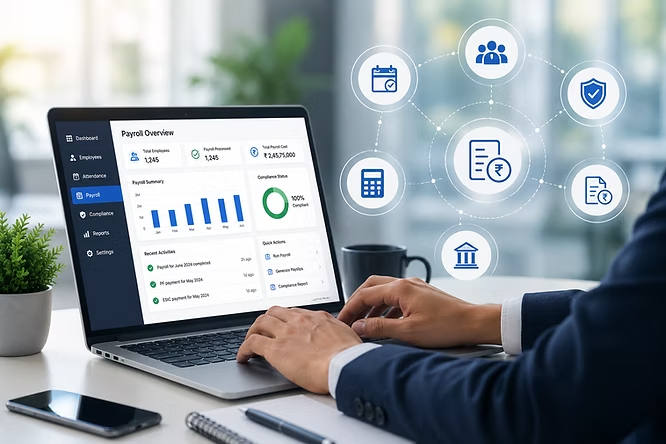
Simplified payroll and benefits administration
Managing payroll and benefits can be tricky while covering multiple branches, locations and divisions.
An HR Management Software makes this easier by:
-
Automating how salaries are calculated
-
Connecting with time and attendance records
-
Handling tax deductions and making sure everything is compliant with the law.
OVERCOMING HR CHALLENGES WITH MANAGEMENT SYSTEMS
Reducing turnover through better engagement
HR management systems are really important for boosting employee engagement, which can help reduce turnover rates. By implementing latest HRMS available , Indian organizations can:
-
Identify trends and patterns in what employees are conveying and how they are reacting to situations.
-
Monitor employee happiness quotient through regular surveys
-
Impliment specific strategies to retain employees and create an environment such that they don’t think about exiting the organization.
Identifying and bridging skill gaps
Good HR management platforms help companies stay competitive by tackling skill gaps. They include:
-
Tools to assess skills
-
Customized learning paths for employees
-
Connections to e-learning platforms
-
Access to best business practices
These features allow HR teams to:
Do regular checks on employee skills
Match employees’ skills with what the company needs now and in future.
Create focused training programs
Ensuring legal compliance and reducing risks
Compliance is a big challenge for HR in India.
Management systems can make this easier by:
-
Automating compliance checks
-
Giving the latest legal information
-
Generating compliance reports
This proactive approach helps reduce legal risks and ensures that companies follow important labor laws like:
-
The Factories Act
-
The Payment of Wages Act
-
The Maternity Benefit Act
CONCLUSION
Managing human resources in India presents unique challenges, from navigating complex labor laws to addressing skill gaps and retaining top talent.
Using the right HR management system can help companies automate everyday tasks and make smart Business decisions based on HR data. As Indian businesses face increasing competition on national as well as global scale, having an effective HR management system (HRMS) is essential for long-term sustenance and growth.